CATEGORY:

All Categories

image description

CONTACT POINT for Dial Test Indicator

MITUTOYO

view
x

The Secret to Accurate Dial Indicator Readings

A dial test indicator is only as good as the part touching your workpiece. Machinists often overlook the contact point for a dial test indicator, yet this tiny component determines your final accuracy. Choosing the wrong tip leads to false readings and ruined parts.

Why the Contact Point Matters

The contact point transfers physical movement from the workpiece to the indicator gear train. Different inspection jobs require different shapes and materials.

If you use a worn or incorrect tip, you introduce cosine error. This mechanical error skews your measurements. Selecting the right contact point ensures perfect repeatability.

Common Types of Contact Points

Different shapes solve specific measurement challenges on the shop floor:

  • Ball Points: The standard choice for flat surfaces. Ruby or carbide balls resist daily wear.

  • Flat Points: Ideal for measuring convex surfaces or spheres.

  • Pin/Needle Points: Perfect for reaching into narrow grooves, slots, or small holes.

Tips for Peak Precision

Maintenance Tip: Regularly check your contact points for flat spots. A worn ball point will distort your roundness measurements.

Always match the point length to your indicator's original specifications. Changing the length alters the leverage ratio of the internal pivot mechanism, which completely ruins the tool's calibration.

Additionally, ensure the thread size matches your indicator brand. Most manufacturers use either M1.6 or #4-48 threads.

Upgrade Your Setup Today

Do not let a worn tip compromise your machining quality. Inspect your contact point for a dial test indicator regularly. Swap out damaged tips today to keep your quality control flawlessly precise.

Selection of ball diameter : 0.5, 0.7, 1.0, 2.0 & 3.0mm
  • Stylus length affects the scale factor of an indicato
Buy Now
image description

DIAL TEST INDICATOR - Full set

MITUTOYO

view
x

The Complete Setup for Flawless Workshop Accuracy

Machinists and engineers face complex layout challenges every single day. Measuring runout, aligning machine vices, and checking flat surfaces require extreme precision. A standalone gauge rarely solves these problems alone. Investing in a premium dial test indicator - full set gives you everything you need to succeed.

What is a Dial Test Indicator Full Set?

This comprehensive kit pairs a highly sensitive lever-type indicator with a versatile collection of mounting accessories. Standard indicators only measure straight up and down. A test indicator uses a pivoting stylus to measure small geometric variations in tight spaces.

The full set bundles the gauge with critical hardware like dovetail clamps, contact points, and magnetic bases. This prevents you from hunting for matching parts mid-job.

Essential Components Included in the Kit

A complete kit transforms your inspection workflow by including:

  • The Indicator Body: Features clear graduations, usually reading down to 0.01mm or 0.0005 inches.

  • Multiple Swivel Clamps: Let you mount the tool securely to height gauges or boring bars.

  • Extension Rods: Reach deep into engine blocks or complex machinery housings.

  • Varying Contact Points: Include different ball sizes to fit specific grooves.

Why the Full Set Saves You Time and Money

Efficiency Tip: Buying accessories separately costs significantly more. A complete kit ensures total compatibility and protects your delicate tools in a fitted case.

A complete setup eliminates makeshift mounting rigs. Sturdy dovetail attachments eliminate indicator flex, which prevents false readings. You can switch from checking lathe chuck runout to tramming a milling machine head in seconds.

Upgrade your tool chest with a professional dial test indicator - full set today to guarantee absolute accuracy on every project.

Full set comes with :
  • Swivel Clamp for height gage
  • Holding bar for height gage
  • 2 stem size for different application
  • 2 diameter size contact point
Buy Now
image description

DIAL TEST INDICATOR - Pocket Type

MITUTOYO

view
x

Precision Alignment Right in Your Pocket

Machinists often need to run quick quality checks on the fly. Carrying heavy inspection cases across a busy shop floor wastes time and energy. A dial test indicator - pocket type solves this problem instantly. This tool packs incredible mechanical accuracy into a highly compact design.

What is a Pocket Type Dial Test Indicator?

A pocket-type indicator is a smaller, highly streamlined version of the standard lever-type gauge. Engineers design it specifically for portability and tight workspaces.

It clips easily into a shirt pocket like a pen. Despite its miniature size, it measures small surface variations and runout with exceptional reliability. It serves as your first line of defense against machining errors.

Why Every Machinist Needs One

This compact tool offers unique advantages for daily workshop operations:

  • Ultimate Portability: Fits safely into your pocket for fast, on-the-spot inspections.

  • Reaches Tight Spaces: The slim profile slides easily into narrow recesses where full-sized gauges cannot fit.

  • High Sensitivity: The jeweled bearings detect tiny defects down to 0.01mm effortlessly.

  • Easy Setup: Features standard dovetail mounts for instant attachment to magnetic bases.

Best Practices for Fast Inspections

Pro Tip: Keep the contact point parallel to the work surface during tests. Angling the pointer too sharply creates errors that skew your final measurements.

Use this portable gauge to tram milling machine heads, align vices, or check lathe chuck runout quickly. Clean the workpiece surface thoroughly before lowering the stylus.

Do not compromise on accuracy when working away from your main bench. Add a premium dial test indicator - pocket type to your everyday carry gear today for flawless mobile precision.

Pocket type Reversible measuring direction (Clutch type) Stylus is adjustable within 220°
Buy Now
image description

DIAL TEST INDICATOR - Universal Type

MITUTOYO

view
x

The Ultimate Tool for Multi-Angle Inspection

Standard inspection tools often struggle when you face awkward angles and tight machine setups. Repositioning a magnetic base repeatedly wastes valuable production time. A dial test indicator - universal type eliminates this frustration completely. It provides the ultimate flexibility for complex alignment tasks.

What is a Universal Type Dial Test Indicator?

This specialized gauge features a unique, adjustable design that separates it from standard models. While regular indicators only measure in one fixed direction, the universal type allows the dial face or the measuring arm to rotate fully.

This 360-degree versatility means you can read the measurement clearly from any perspective. It makes inspecting hidden recesses incredibly simple.

Top Benefits for High-Precision Machining

Upgrading to a universal model transforms your daily inspection workflow:

  • Unmatched Visibility: Rotate the dial face to face you, preventing neck strain during setups.

  • Omnidirectional Measuring: The contact point moves accurately across multiple planes.

  • Fast Machine Setup: Tram mill heads and align lathe parts without moving the main indicator base.

  • Compact Footprint: Fits easily into crowded setups where standard gauges get stuck.

Pro Tips for Maximum Accuracy

Setup Tip: Always lock the universal joint securely before taking a reading. Any slight movement in the adjustable neck will cause measurement errors.

Use this tool to check the runout of internal bores or deep slots. Keep the contact point at the correct angle relative to the workpiece to prevent cosine errors.

Stop fighting with awkward setups that ruin your measurement accuracy. Invest in a premium dial test indicator - universal type today to make every angle easy to measure.

Universal type Adjusted 360° without moving the indicator
Buy Now
image description

DIAL TEST INDICATOR - Vertical Type

MITUTOYO

view
x

Clear Overhead Visibility for Precise Machining

Standard indicators work well when you look at them from the side. However, reading a horizontal dial becomes incredibly difficult when checking a flat surface on a milling table. A dial test indicator - vertical type fixes this common workshop problem. It places the dial face exactly where you need it.

What is a Vertical Type Dial Test Indicator?

This specialized tool mounts the dial face perpendicular to the measuring stylus. Unlike standard models, the face points straight up toward the operator.

Machinists use it primarily for top-down inspections, height gauge layouts, and centering operations. It allows you to read measurements clearly without bending down or using inspection mirrors.

Key Advantages for Your Machine Shop

Choosing a vertical configuration provides immediate benefits for your setup:

  • Flawless Overhead Reading: The upright dial face eliminates parallax errors when looking down.

  • Ideal for Height Gauges: Slides easily onto surface plates to check flatness effortlessly.

  • Compact Width: The slim vertical profile fits perfectly into narrow slots and tight channels.

  • High Sensitivity: Balanced internal levers detect tiny surface variations down to 0.01mm.

How to Use It for Peak Performance

Precision Tip: Ensure the vertical stem stands perfectly upright during inspection. Any tilt reduces accuracy and alters your measurement data.

Mount the indicator to your machine spindle or height gauge using the secure dovetail slots. Lower the stylus until it touches the workpiece, then zero the bezel. Move the part slowly to inspect for flatness or parallelism.

Stop straining your eyes with poorly positioned gauges. Upgrade to a premium dial test indicator - vertical type today to make top-down inspections comfortable and accurate.

Horizontal 20 tilted face
Buy Now
image description

UNIVERSAL HOLDER

MITUTOYO

view
x

The Ultimate Solution for Flexible Tool Positioning

Securing your inspection gauges at the perfect angle can feel impossible during complex machining setups. Standard rigid clamps lack the flexibility required for tight spaces. A premium universal holder solves this frustration completely. It provides the multi-axis adjustment you need for precise, wobble-free measurements.

What is a Universal Holder?

A universal holder is an adjustable mounting accessory designed for dial indicators and test gauges. It features a series of articulated joints or a fully flexible arm.

Machinists use it to position indicators effortlessly around workpieces on lathes, mills, and surface plates. It locks tightly into place to ensure absolute stability during inspections.

Key Benefits for High-Precision Machining

Adding this versatile tool to your arsenal vastly improves your daily workflow:

  • 360-Degree Rotation: Multi-swivel joints allow you to position your gauge at any angle.

  • Central Locking System: A single knob frequently locks all joints simultaneously for fast setups.

  • Zero Indicator Flex: Rugged manufacturing prevents the arm from drooping or vibrating during measurements.

  • Broad Compatibility: Accommodates various stem sizes and dovetail attachments easily.

Pro Tips for Maximum Stability

Setup Tip: Always mount the holder base as close to the inspection area as possible. Shorter arm extensions naturally minimize vibration and prevent false readings.

Secure the base to your machine spindle or magnetic block. Adjust the articulated arm until the indicator contact point touches the workpiece surface correctly. Tighten the central lock firmly before zeroing your dial face.

Stop fighting with rigid, frustrating mounting setups that compromise your accuracy. Invest in a heavy-duty universal holder today to make tool alignment fast, simple, and flawlessly precise.

Allows the indicator to be set at the desired attitude to the workpiece
Buy Now
image description

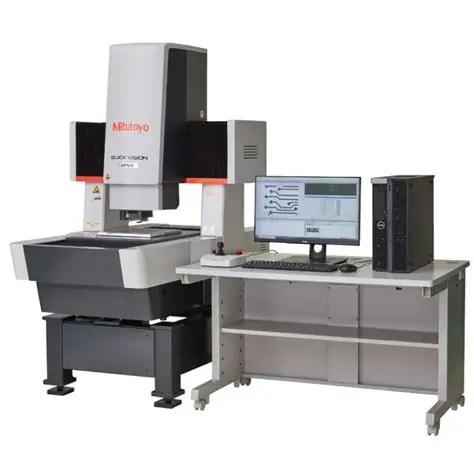
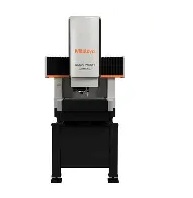
VISION MEASURING SYSTEM - QI

MITUTOYO

view
x

Transform Quality Control with the Vision Measuring System - QI

Speed and accuracy often clash in traditional manufacturing. However, the Vision Measuring System - QI bridges that gap perfectly. This advanced optical tool uses high-resolution cameras to measure complex parts in seconds. It replaces slow manual checks with rapid, repeatable digital inspections.

Advanced Optical Technology

The QI series utilizes superior telecentric lenses. These lenses eliminate distortion and provide a clear view of every edge. The system captures sharp images even on shiny or dark surfaces. Its powerful sensors detect microscopic defects that the human eye might miss. You get a complete data profile of your part without any physical contact.

Software-Driven Precision

The integrated software makes the Vision Measuring System - QI stand out. It automatically recognizes parts and aligns them for measurement. Operators can program complex routines for high-volume batches.

  • Auto-Focus: Ensures sharp images every time.

  • Instant Reporting: Generates statistical data for immediate analysis.

  • CAD Comparison: Compares physical parts directly against digital designs.

Why Your Shop Needs the QI Series

Manual measurement creates bottlenecks in production. This system removes those hurdles. It increases your throughput while maintaining strict tolerances. Because it is non-contact, it never deforms sensitive or flexible components.

The QI system works perfectly for electronics, medical devices, and aerospace parts. It provides the reliable data you need to satisfy your most demanding clients. Upgrade your facility today with the next generation of optical measurement technology.


Non-contact 2D system High efficiency measurement with a double telecentric optical system Field of view 32x24mm Long focal depth and wide field of view to increase accuracy Variety of standardized stages in sizes up to 400x200mm
Buy Now
image description

RADIUS GAGES

MITUTOYO

view
x

The Simple Way to Measure Perfect Profiles

Machining flat surfaces requires accurate calipers, but checking rounded corners demands a different approach entirely. Inspecting a curved profile by eye leads to defective parts and wasted material. High-quality radius gages solve this problem instantly. They provide a fast, foolproof way to check both internal and external curves.

What are Radius Gages?

Radius gages are precision leaf-style measuring tools. Manufacturers stamp each metal leaf with a highly accurate, pre-measured radius.

Inspection teams use them to check the curvature of tool edges, mold corners, and machined fillets. They work on a simple pass/fail system. You match the gage profile to your workpiece until you see zero light passing through the seam.

Key Features of a Premium Gage Set

A standard industrial set offers several unique design benefits for your shop:

  • Dual-Ended Leaves: Each leaf measures internal radii on one end and external radii on the other.

  • Locking Nut Design: A central screw allows you to select a single leaf or lock it firmly into position.

  • Corrosion Resistance: Satin-chrome stainless steel finishes prevent rust from handling and humidity.

  • Clear Markings: Laser-etched fractions or decimals make selecting sizes incredibly fast.

How to Achieve Perfect Inspections

Inspection Tip: Always wipe your workpiece clean before checking the profile. Tiny metal burrs or heavy grease layers mimic a bad radius reading.

Place the selected leaf directly against the curved edge of your part. Look toward a bright light source behind the tool. If you see light bleeding through the center or edges, the radius is incorrect.

Stop guessing on your rounding and contouring work. Invest in a durable set of radius gages today to keep your production flawlessly accurate.

Radius size is stamp on each gage leaf Each leaf comprise an internal and external radius gage of the same size
Buy Now
image description

SPRING DIVIDER AND CALIPERS

MITUTOYO

view
x

The Timeless Tools for Flawless Workshop Layouts

Digital tools dominate modern manufacturing, yet manual layout instruments remain irreplaceable. For layout work, scratching precise lines, and transferring distances, nothing matches a spring divider and calipers set. These classic mechanical tools give woodworkers, machinists, and leather crafters ultimate control over their geometry.

Understanding Spring Dividers and Calipers

Though they look similar, these tools serve distinct, highly specialized purposes on the bench:

  • Spring Dividers: Feature two sharp, pointed legs. You use them to scribe precise arcs, divide lines equally, or transfer distances from a steel rule to your workpiece.

  • Inside Calipers: Feature outward-curving legs designed to measure the internal diameters of holes or slots.

  • Outside Calipers: Feature inward-curving legs to measure the thickness or external diameter of shafts and blocks.

A heavy-duty bow spring holds the legs firmly together, while a central solid nut allows for micro-adjustments.

Key Benefits of Manual Layout Tools

Adding these traditional instruments to your toolkit provides immediate advantages:

  • Zero Battery Dependency: They never fail mid-job due to a dead screen or electronic glitch.

  • Maximum Measurement Transfer: Lock your dimension into place to copy a thickness directly to another part.

  • High Scratched Visibility: The hardened tips cut clean, crisp lines into metal or wood layout dye effortlessly.

Pro Tips for Peak Accuracy

Adjustment Tip: Always apply slight pressure to the legs while turning the adjustment nut. This reduces thread wear and allows you to dial in your dimension much faster.

Store your tools in a dry drawer to prevent surface rust. Periodically stone the points of your divider to keep them razor-sharp.

Embrace traditional accuracy on your workbench. Invest in a premium spring divider and calipers set today to make your layout work flawlessly precise.

Outside Caliper , Inside Caliper and Spring Divider Full hardened and tempered joints, spring, washer and points
Buy Now
image description

SQUARE MASTER

MITUTOYO

view
x

The Ultimate Standard for Perfect Perpendicularity

Machinists know that minor alignment errors create massive problems down the line. If a machine column or workpiece stands slightly tilted, your entire production run fails quality control. The Square Master solves this challenge completely. It provides the highest level of perpendicular measurement accuracy available today.

What is a Square Master?

A Square Master is an ultra-precision inspection instrument designed to measure squareness, straightness, and parallelism. Unlike standard machinist squares, it features a built-in dial indicator mechanism and an adjustable tracking vertical slide.

Inspectors place it on a surface plate to reference a perfect 90-degree angle. It detects deviations down to the micron level instantly.

Why Your Inspection Room Needs One

Using this specialized master gauge elevates your quality control process immediately:

  • Direct Error Readings: The dial shows you exactly how much a surface deviates from a perfect 90 degrees.

  • Massive Time Savings: It eliminates the need for tedious manual calculations with cylindrical squares.

  • Unmatched Repeatability: High-grade granite or hardened steel construction ensures stable, reliable results every time.

  • Versatile Auditing: Perfect for calibrating CNC machine axes, squaring milling heads, and inspecting finished components.

Best Practices for Peak Accuracy

Calibration Tip: Always clean your surface plate thoroughly before using the gauge. A single microscopic dust particle under the base will alter your squareness readings.

Slide the indicator housing smoothly down the vertical column against your workpiece. Note any movement on the dial face to determine the error slope.

Do not let hidden perpendicularity errors ruin your machining reputation. Invest in a premium Square Master today to guarantee absolute, flawless precision in every single setup.

Squareness and Straightness measurements can be performed accurately
Buy Now
image description

STANDARD SCALE

MITUTOYO

view
x

Why Every Precision Lab Needs a Standard Scale

Accuracy starts with a reliable reference. A Standard Scale serves as the primary benchmark for all your measuring equipment. Without a certified scale, you cannot verify the precision of your other tools. Professionals across various industries trust these scales to maintain strict quality standards.

The Importance of Calibration

Every measurement tool loses accuracy over time. Wear and temperature changes affect your calipers and micrometers. A high-precision standard scale allows you to check these instruments regularly. By comparing your tools against a known standard, you eliminate measurement errors. This process ensures your production line remains consistent and reliable.

Key Features of a Premium Scale

Most professional scales feature glass or high-grade steel construction.

  • Precision Graduations: Manufacturers etch lines with extreme accuracy using lasers.

  • Low Thermal Expansion: The material resists size changes during temperature shifts.

  • High Contrast: Sharp markings make it easy to read under magnification.

  • Durability: Protective coatings prevent scratches and corrosion over years of use.

Applications in Modern Industry

You will find these scales in many settings. Quality labs use them to calibrate optical systems and vision machines. Machinists rely on them to set up manual layout work. These scales provide the physical proof that your measurements meet international requirements.

Investing in a quality scale protects your reputation. It prevents costly reworks and ensures parts fit together perfectly. If you value precision, a certified standard scale is a mandatory addition to your facility. Upgrade your calibration routine today to achieve better results tomorrow.

Used as a traceable standard of length for calibrating measuring instrument
Buy Now
image description

DIGIMATIC Micrometer DEPTH GAGE

MITUTOYO

view
x

Eliminate Guesswork in Depth Measurement

Measuring blind holes, slots, and recesses accurately can challenge even experienced machinists. Traditional mechanical scales invite reading mistakes and slow down your inspection process. Upgrading to a premium Digimatic micrometer depth gage changes everything. It combines classic micrometer accuracy with instant, crystal-clear digital readouts.

What is a Digimatic Micrometer Depth Gage?

This precision instrument measures the depth of holes, slots, and shoulders with incredible accuracy. It features a hardened steel base, an electronic micrometer head, and interchangeable measuring rods.

Unlike standard vernier calipers, this tool uses a specialized micrometer mechanism to achieve resolution down to 0.001mm or 0.00005 inches. It completely eliminates the user calculations that lead to costly mistakes.

Key Features and Benefits

Adding this advanced digital tool to your inspection bench provides immediate advantages:

  • Instant LCD Readings: A large digital screen displays your measurements clearly, eliminating parallax errors.

  • Interchangeable Rods: A single tool body adapts to measure varying depths by switching the calibrated rods.

  • Data Output Capabilities: Most models connect directly to SPC software for seamless quality control tracking.

  • Zero-Set Button: It allows you to establish a comparative reference point anywhere along the travel distance.

Best Practices for Flawless Quality Control

Measurement Tip: Always clean the workpiece surface and the tool base thoroughly. A tiny metal shaving trapped under the wide base will ruin your flatness reference.

Hold the base firmly against your reference surface. Gently rotate the ratchet thimble until the rod makes contact with the bottom of the slot. The ratchet ensures consistent measuring force every single time.

Don't let manual reading errors compromise your machining reputation. Invest in a premium Digimatic micrometer depth gage today to maximize your workshop efficiency.

Interchangeable rod typeenable wide range measurement Rod diameter 4mm Base 63.5x16mm or 101.6 x16mm
Buy Now