CATEGORY:

All Categories

image description

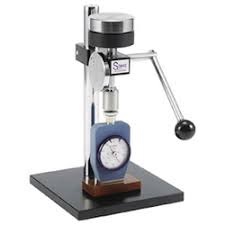
DUROMETER MANUAL STAND GS-615

TECLOCK

view
x

Stability for Success: The Durometer Manual Stand GS-615

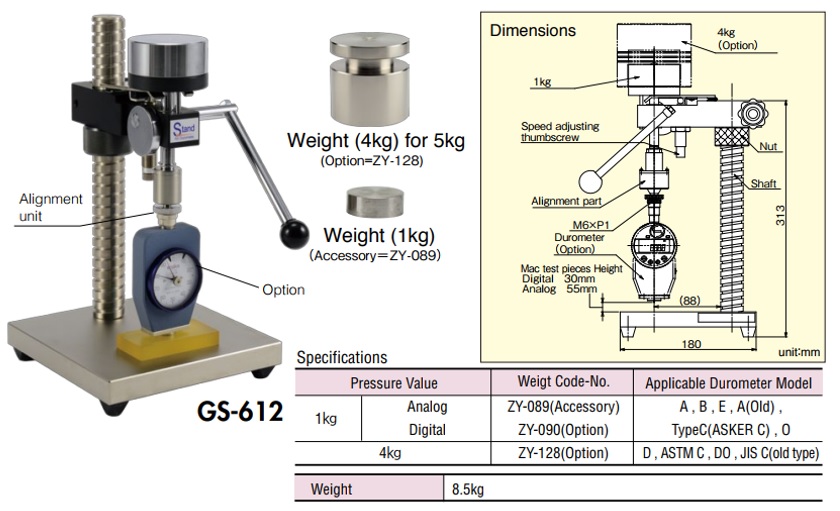
Consistency is the heartbeat of accurate hardness testing. When you measure rubber or plastic manually, human variation often skews the results. The Durometer Manual Stand GS-615 eliminates these variables. This essential tool provides a stable platform for your durometer. It ensures that every test follows a vertical path with the exact same pressure.

Why Stability Matters in Hardness Testing

Handheld testing often leads to uneven application force or tilted angles. These small mistakes cause significant errors in Shore hardness readings. The GS-615 stand solves this by holding the durometer in a fixed, perpendicular position. A simple lever-operated mechanism allows you to lower the probe onto your sample smoothly. This controlled movement guarantees that your data remains repeatable across different operators and shifts.

Top Features of the GS-615

  • Universal Compatibility: The stand easily accommodates most standard digital and analog durometers.

  • Adjustable Height: Quickly modify the clearance to fit samples of various thicknesses and shapes.

  • Precision Alignment: The robust construction prevents flexing, which keeps the sensor perfectly vertical.

  • Manual Control: The ergonomic lever gives the user a tactile feel while maintaining a constant descent speed.

Elevate Your Quality Control Standards

Integrating the Durometer Manual Stand GS-615 into your lab transforms your testing process. You move from "estimation" to "verification." This professional setup builds confidence in your quality reports. It shows your clients that you prioritize precision in every material check. By removing human error, you save time and reduce the need for re-testing.

Don't let shaky hands compromise your data. Give your hardness testing the solid foundation it deserves. Upgrade to the GS-615 manual stand today and lock in your measurement accuracy.

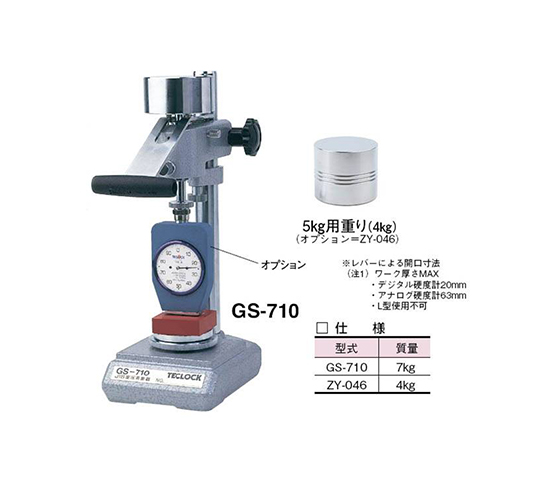
This supplementary device assists hardness measurements by using hydraulics to provided a constant load. Measurements can be taken with a roughly 1kg load for type A Durometer and a roughly 5kg (using optional 4kg weight (ZY-046) load for type D Durometers. Teclock made in Japan
Buy Now
image description

ANEMOMETER

TECPEL

view
x
image description

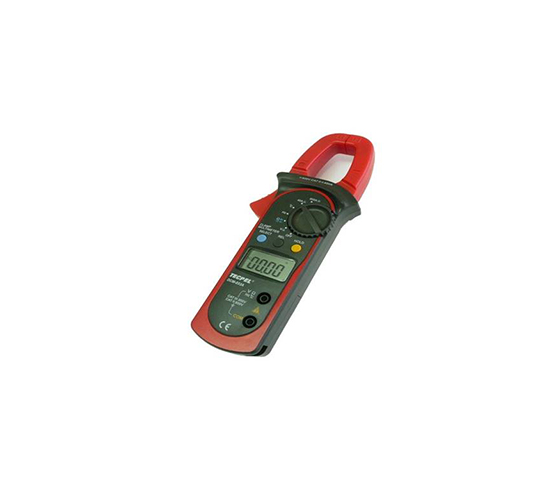
CLAMP METER DIGITAL

TECPEL

view
x
Safe Electrical Measurement: The Clamp Meter Digital

Measuring high electrical current presents serious safety hazards for technicians. Traditional multimeters require cutting wires to place test leads inline. A clamp meter digital eliminates this danger by reading magnetic fields around live conductors non-invasively.

This guide explores how a digital clamp meter speeds up electrical diagnostics safely.

What Is a Digital Clamp Meter?

A digital clamp meter combines a basic digital multimeter with a hinged magnetic jaw.

Instead of opening the circuit, you simply clamp the jaws around a single live wire. The internal sensors measure the magnetic field and display accurate AC or DC current values instantly.

Key Advantages for Electricians

Upgrading to a quality clamp meter provides several vital working benefits:

  • Non-Contact Safety: Measure high amperage without touching bare wires or interrupting power.

  • Versatile Functions: Measure voltage, resistance, continuity, and frequency alongside current.

  • Fast Diagnostics: Clamping around conductors saves hours during routine panel inspections.

  • True-RMS Accuracy: Advanced models deliver precise readings on complex non-linear electronic loads.

Common Applications Across Industries

Technicians rely on digital clamp meters for daily troubleshooting tasks:

  1. HVAC Systems: Measure compressor motor current and blower fan performance.

  2. Industrial Maintenance: Check 3-phase motor balances and track circuit overloads.

  3. Residential Electrical: Troubleshoot tripping circuit breakers and check main panel loads.

  4. Automotive Repair: Trace parasitic battery drain and test alternator output.

How to Use a Clamp Meter in 4 Simple Steps

Follow these easy steps to capture safe, reliable current measurements:

  1. Select Current Mode: Turn the rotary dial to AC or DC amperes ($\text{A}$).

  2. Isolate One Wire: Clamp the jaws around only one conductor, not the entire power cord.

  3. Close the Jaw: Ensure the clamp jaw closes completely around the wire.

  4. Read the Display: Note the digital amperage reading on the backlit screen.

Final Thoughts

A clamp meter digital combines safety, speed, and precision in one portable tool. By eliminating wire cutting, this essential tester protects technicians while delivering reliable diagnostics. Invest in a durable clamp meter to streamline your electrical maintenance projects today.

K Type connector DC Voltage 400mV~ 600V (0.8%+1) AC Voltage 4V ~ 600V (1%+5) DC Current 40A/400A (2%+3) AC Current 40A/400A (2.5%+5) Resistance 400 ~40M Ohm (1%+2) Tecpel
Buy Now
image description

TAPER GAUGES

SK Niigata Seiki

view
x

Master Your Internal Dimensions

Accurate measurement of narrow slots and bore diameters determines the success of your mechanical assembly. You need a tool that slides easily into tight spaces without losing precision. TAPER GAUGES provide the simplest and most reliable way to check these critical tolerances. They eliminate the guesswork of using calipers in restricted areas. This tool ensures your pipe fittings and machined parts meet exact specifications every time.

Why Choose Professional Taper Gauges?

Standard rulers cannot reach inside a small hole to find the true diameter. A dedicated taper gauge uses a precise wedge shape to convert depth into width instantly.

  • Permanent Etched Scales: Read metric and imperial sizes that never wear off under heavy shop use.

  • Hardened Stainless Steel: The polished surface resists rust and prevents thin tips from bending.

  • Rapid Inspection: Simply insert the gauge until it stops and read the measurement at the face.

  • Slim Profile: The flat design fits into thin slits where cylindrical plug gauges fail.

Essential for Welders and Machinists

Pipe fitters and automotive technicians trust TAPER GAUGES for daily inspections. They work perfectly for measuring root gaps in welding or checking slot widths in engine blocks. You can carry these lightweight tools in a shirt pocket for quick checks on the production floor. Because they feature a high-contrast finish, you can read your data even in dimly lit industrial environments.

Accuracy You Can Count On

Stop relying on visual estimates for your gap measurements. These gauges offer a professional solution that fits any budget. They empower you to maintain high quality control standards on every project.

Invest in a set of TAPER GAUGES today. Experience the speed and confidence of mechanical precision.

Measurement of groove and gap etc. Machine grade carbon steel (S55C, not hardened Use the thickness of taper to measure the gap width Packed in plastic carrying case Accuracy +/-0.04mm Satin Finish
Buy Now
image description

TAPER GAUGES

SK Niigata Seiki

view
x

Mastering Precision with Taper Gauges

In the world of mechanical engineering, measuring internal widths and gaps requires specialized tools. A taper gauge is a simple yet powerful instrument designed for this exact purpose. Whether you are checking pipe fit-ups or slot widths, this tool delivers instant results.

What is a Taper Gauge?

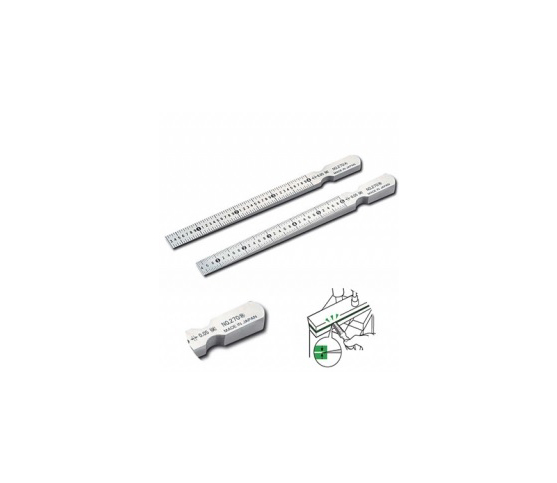
A taper gauge is a thin, wedge-shaped metal tool. It features precise graduations along its length. As you slide the gauge into a gap, the width increases at a constant rate. The point where the gauge stops indicates the exact measurement of the opening.

Key Benefits for Your Workflow

Manufacturers prefer these gauges because they offer several advantages:

  • Speed: You get a reading in seconds without complex setups.

  • Portability: Most models are small enough to fit in a shirt pocket.

  • Durability: Made from stainless steel, they resist wear and corrosion in harsh shop environments.

  • Dual Scales: Many gauges provide measurements in both metric and imperial units.

Common Uses in the Field

You will find a taper gauge in almost every inspection toolkit. Welders use them to measure root gaps before joining metal plates. Machinists rely on them to check the diameter of tubing or the width of narrow slots. Even automotive technicians use them to verify clearances between engine components.

Tips for Accurate Readings

To ensure the best results, always keep the gauge clean. Dirt or oil can change the reading slightly. Gently insert the tool into the gap until it makes light contact with both sides. Do not force it, as this can damage the thin edge or give a false measurement.

By using a reliable taper gauge, you maintain high standards of quality and safety. It is an essential investment for any precision-focused professional.

Satin finishing Measure openings, slot width, hole size etc. Use the width of taper to measure the gap width Hardened stainless steel (SUS420J2) HV480
Buy Now
image description

WELDING GAUGES

SK Niigata Seiki

view
x

Mastering Quality with Welding Gauges

In the welding industry, visual inspection is the first line of defense against structural failure. To ensure a joint meets safety standards, inspectors must go beyond a simple glance. Consequently, welding gauges are the primary tools used to verify dimensions and identify defects accurately.

What are Welding Gauges?

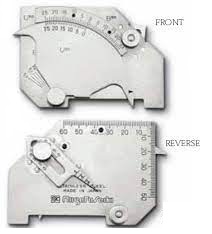
Welding gauges are precision instruments designed to measure various parts of a weld. For example, they check the size of a fillet weld, the height of a reinforcement, and the depth of an undercut. Because they come in various shapes—such as the Bridge Cam or V-WAC gauge—they can handle almost any inspection task.

Why These Tools Are Essential

Accuracy in welding prevents catastrophic errors. If a weld is too small, it may not hold the required load. On the other hand, overwelding wastes expensive filler metal and increases heat distortion. Using a welding gauge provides several key benefits:

  • Code Compliance: You can prove your work meets AWS or ISO standards.

  • Safety: Accurate measurements ensure the joint can handle its design stress.

  • Cost Efficiency: You avoid wasting time and materials on unnecessary repairs.

How to Use a Fillet Weld Gauge

Using a standard fillet gauge is very straightforward. First, select the gauge that matches the specified weld size. Next, place the curved edge against the toe of the weld. Finally, check if the blade tip touches the center of the weld face. This quick check confirms if the throat thickness is sufficient.

Maintaining Your Gauges

To keep your tools reliable, you must keep them clean. Wipe off soot and metal shavings after every use. Furthermore, store them in a protective case to prevent bending the thin measuring blades.

Ultimately, a set of high-quality welding gauges is a small investment that protects your professional reputation. It ensures every bead you lay is safe, strong, and precise.

Measure undercut depth/ Groove angle/ Inconsistent level Height of fillet weld & bead weld/ Throat thickness of fillet Root opening/ Plate thicknessExternal diameter of circular workpiece Stainless steel (SUS420J2)
Buy Now
image description

Digital Angle Meter

SK Niigata Seiki

view
x

Achieve Perfect Precision with a Digital Angle Meter

In construction and woodworking, a slight error can ruin an entire project. Precision is no longer a luxury; it is a requirement. The digital angle meter, also known as a digital protractor, provides the accuracy you need for every task.

What is a Digital Angle Meter?

A digital angle meter is a compact, electronic tool that measures slope and angles with extreme precision. Unlike traditional spirit levels, these devices provide a clear numerical readout on an LCD screen. They usually measure in degrees, percent, or millimeters per meter.

Key Features of Modern Meters

Today’s tools offer more than just basic readings. Most high-quality models include:

  • Magnetic Bases: These allow you to attach the meter to saw blades or metal pipes for hands-free work.

  • Automatic Inversion: The display flips when you turn the device upside down.

  • Hold Function: This freezes the measurement on the screen for easy recording.

Common Applications

Whether you are a professional or a DIY enthusiast, this tool is invaluable. Carpenters use them to set table saw blade angles perfectly. Welders rely on them to align joints before fusing metal. Even DIYers find them useful for hanging shelves or checking the pitch of a roof.

Why Switch to Digital?

Digital meters eliminate the guesswork of reading bubbles or manual scales. They provide instant results, which saves time on the job site. Because they are small, they fit easily into a pocket or tool belt.

By adding a digital angle meter to your toolkit, you ensure every cut and every alignment is perfect the first time.

Precision angle measurement and working reference for assembly of machinery, tooling, jigs, etc. Magnetic base In Relative Mode, Zero-point can be set at any position. Origin can be set and stored for use in Absolute Mode
Buy Now
image description

DIGITAL LEVEL - LEVELNIC DL-S3

SK Niigata Seiki

view
x

Achieve Perfection: The Power of the LEVELNIC DL-S3 Digital Level

High-precision machinery requires a foundation that is perfectly flat and level. Even a microscopic tilt can cause long-term wear or calibration errors. The LEVELNIC DL-S3 stands as the ultimate solution for industrial leveling tasks. This high-sensitivity digital level transforms how engineers measure straightness, flatness, and verticality. It brings laboratory-grade precision directly to your shop floor.

Superior Sensitivity for Modern Engineering

The DL-S3 series excels because it offers incredible resolution. While traditional bubble levels rely on human eyesight, the LEVELNIC provides a clear digital readout. It detects the smallest variations in surface angle instantly. This accuracy is essential for installing CNC machine tools or leveling surface plates. The device features a built-in RS232C output, which allows you to send data directly to a PC for professional analysis.

Why Professionals Choose the DL-S3

  • High Resolution: Measure angles with extreme precision down to .

  • User-Friendly Interface: The large digital display eliminates the guesswork found in analog vials.

  • Fast Response Time: Get stable readings in seconds to speed up your installation process.

  • Versatile Applications: Use it for checking machine tool beds, measuring floor flatness, or calibrating large structures.

Optimize Your Machine Performance

Integrating the LEVELNIC DL-S3 into your maintenance routine extends the life of your equipment. Correct leveling reduces vibration and prevents premature mechanical failure. This proactive approach saves your company thousands in repair costs. When your machines are level, your output remains consistent and your quality remains high.

Don't settle for "close enough" when it comes to your machine foundations. Choose the tool that sets the global standard for digital leveling. Invest in a LEVELNIC DL-S3 today and build your success on a perfect foundation.

Buy Now
image description

BELT TENSION METER

SONIC

view
x

Maximizing Efficiency with a Belt Tension Meter

In industrial maintenance, proper belt tension is critical for system health. If a belt is too loose, it slips and loses power. Conversely, if it is too tight, it damages bearings and motors. Consequently, a belt tension meter is the most reliable tool to find that perfect balance.

What is a Belt Tension Meter?

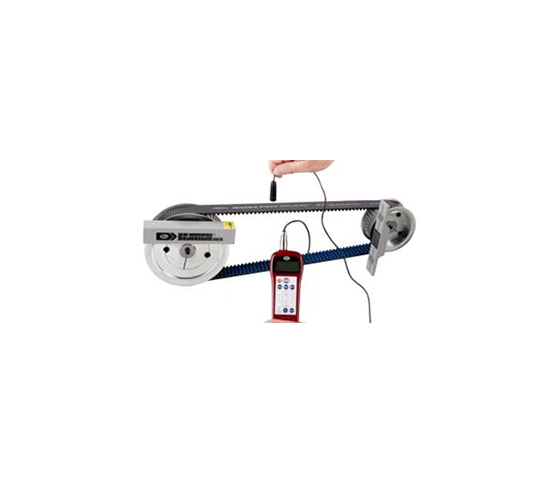
A belt tension meter is a precision instrument that measures the static tension of v-belts, timing belts, and ribbed belts. Modern versions often use sonic technology. These devices capture the vibration frequency of the belt span. Then, they convert that frequency into a force measurement, such as Newtons or Pounds.

Why Precision Matters

Relying on "thumb pressure" is a common mistake. Unfortunately, manual checks are often inaccurate. By using a digital meter, you gain several benefits:

  • Extended Component Life: Correct tension reduces stress on shafts and bearings.

  • Energy Savings: Efficient power transfer lowers electricity consumption.

  • Reduced Downtime: You can identify issues before a belt snaps.

  • Consistency: Every technician can achieve the same exact setting.

How to Use a Sonic Tension Meter

Using these tools is quite simple. First, input the belt's mass, width, and span length into the device. Next, hold the sensor near the belt and pluck the belt like a guitar string. Finally, the meter analyzes the sound waves and displays the tension instantly.

Essential Maintenance Tips

To ensure accurate readings, keep the belt surface clean. Furthermore, always check the tension when the machine is completely powered down. Regularly calibrate your belt tension meter to maintain high precision.

Ultimately, this tool is an investment in reliability. It ensures your drive systems run smoothly, safely, and for a much longer time.

Get consistent, accurate belt tension readings every time. analyzing the harmonic characteristics of a vibrating belt. Strum the belt like a guitar string and the meter takes care of the rest. Belts, like strings, vibrate at a particular natural frequency based on mass and span length
Buy Now
image description

PRECISION STAINLESS STEEL RULES

SHINWA

view
x

The Foundation of Accuracy: Precision Stainless Steel Rules

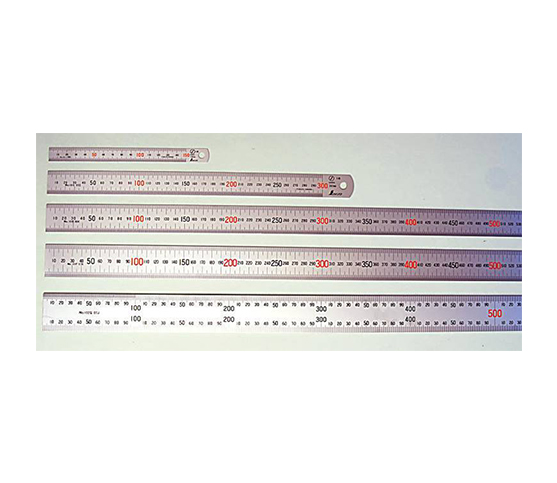
Every masterpiece starts with a single, accurate measurement. In a world full of digital gadgets, the precision stainless steel rules remain a staple in every professional workshop. These tools offer a level of reliability that electronics simply cannot match. They provide a permanent, physical reference point for engineers, machinists, and woodworkers alike.

Why Quality Material Matters

Not all rulers are equal. Cheap plastic or thin aluminum alternatives can warp or wear down over time. Professional-grade stainless steel resists corrosion and maintains its straight edge even after years of heavy use. Manufacturers use photo-engraving or laser-etching to create the markings. This process ensures that the graduations stay crisp and legible. You will never have to worry about fading lines during a critical project.

Benefits of Using Steel Rules

  • Extreme Durability: Stainless steel handles heat, oil, and impacts without losing its shape.

  • Easy Readability: Satin chrome finishes reduce glare, which allows you to read measurements in bright light.

  • Versatile Measurement: Most precision rules feature both metric and imperial scales for global project compatibility.

  • Zero-Point Accuracy: The ends are precision-ground to ensure your measurements start exactly at the edge.

Elevate Your Craftsmanship

Using high-quality precision stainless steel rules boosts your confidence at the workbench. You stop second-guessing your layouts and start trusting your cuts. These tools help you identify errors early in the fabrication process. This saves you time, reduces material waste, and ensures a perfect fit every time.

Reliability is the greatest tool a professional can own. Choose a measurement partner that never runs out of battery and never goes out of calibration. Upgrade your toolbox with precision stainless steel rules today and measure with total confidence.

Buy Now
image description

PRECISION TRY SQUARE

SHINWA

view
x
image description

VIBRATION DIGITAL METER 1332B

SHOWA

view
x

Precision Maintenance: The Power of the Vibration Digital Meter 1332B

Predicting machine failure before it happens saves thousands in repair costs. The Vibration Digital Meter 1332B serves as your first line of defense against unexpected downtime. This handheld tool provides the critical data you need to keep your facility running smoothly.

Why Monitor Vibration?

Excessive vibration is a cry for help from your machinery. It usually signals misalignment, imbalance, or bearing wear. By using a digital meter, you catch these subtle signs early. Regular checks allow you to schedule maintenance on your terms rather than reacting to a total breakdown.

Key Features of the 1332B

  • High Accuracy: Get precise readings for acceleration, velocity, and displacement.

  • Portable Design: Its compact size makes it perfect for inspecting hard-to-reach motors and pumps.

  • Easy Readout: The large digital display ensures clear visibility even in dim industrial environments.

  • Wide Frequency Range: This versatility allows you to monitor various equipment types with a single device.

Simplify Your Workflow

The Vibration Digital Meter 1332B is remarkably user-friendly. You do not need to be a vibration analyst to understand the results. Simply place the probe, take the reading, and compare it to standard safety limits. This immediate insight empowers your maintenance team to make fast, informed decisions.

Final Value

Reliability is the heartbeat of any production line. With the 1332B in your toolkit, you ensure that every motor and fan operates within safe parameters. Protect your assets and optimize your performance with professional-grade vibration monitoring.


Vibration measurement for blowers used in automotive coating after drying. To determine the electromagnetic valve actuation condition. Defect inspection of machine tools. Frequency Range (Hz) Acceleration : 5 to 10,000 (+/-1 dB) and Displacement: 10 to 1000 (1 dB)
Buy Now