CATEGORY:

Material Hardness

Filter results by:
image description

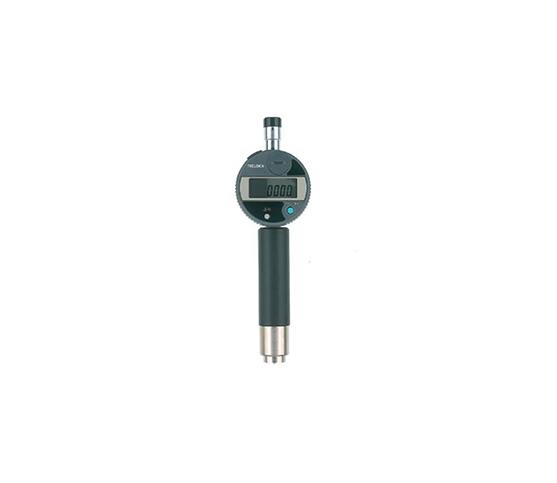
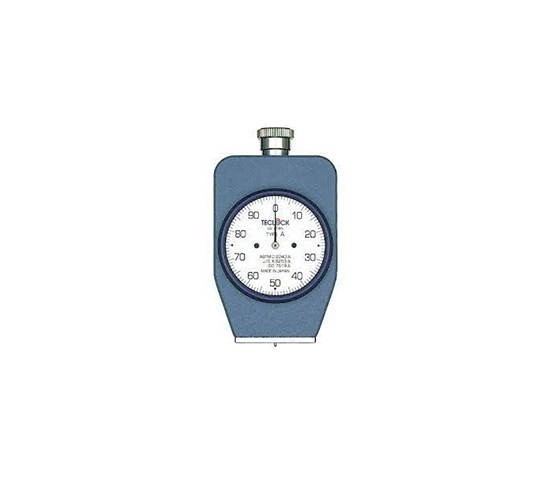
DIGITAL DUROMETER

TECLOCK

view
x

Upgrade to Precision with a Digital Durometer

Manual testing often leaves too much room for human error. Therefore, switching to a Digital Durometer is the smartest move for modern quality control. These devices provide clear, numerical readings that eliminate the guesswork of analog dials. Whether you test soft rubber or rigid plastics, a digital interface ensures every measurement remains consistent and reliable.

The Digital Advantage in Testing

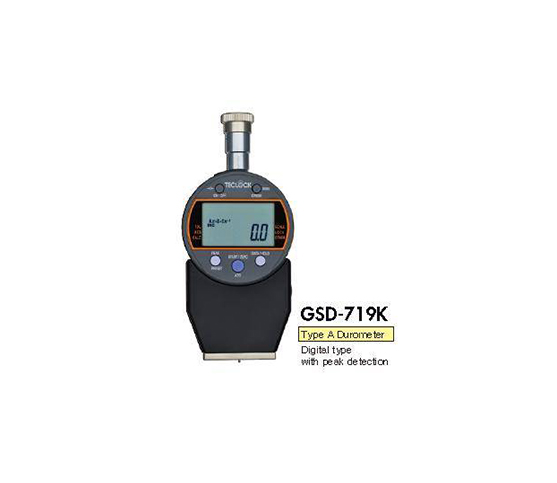
Why do professionals prefer digital models over traditional ones? Specifically, digital durometers offer superior resolution and data stability. Most models feature a large LCD screen that displays the hardness value instantly. Furthermore, many versions include a peak-hold function. This captures the highest reading during the test, which is critical for materials that "relax" under pressure.

Essential Features of Digital Models

Modern digital testers provide more than just a number. Indeed, they offer a suite of tools that improve your daily workflow.

Feature User Benefit
Backlit LCD Read data clearly in any lighting condition.
Data Output Export readings to a PC for professional reports.
High Accuracy Achieve tolerances of point or better.
Peak Hold Capture maximum hardness with one press.
This is the model for which peak hold function is mounted This is effective to measure hardness of Elastomer of which maximum value is unreadable due to relaxation phenomenon. Determine by Shore A, B ,C , D, 00, 0 etc.

Streamline Your Documentation

Moreover, these tools help you comply with international standards like ASTM D2240. Many digital units store multiple readings in their internal memory. By doing so, you can calculate averages without using a separate calculator. Additionally, the rugged construction protects the sensitive electronic sensors from industrial dust and impacts.

Invest in Professional Accuracy

In conclusion, don't settle for approximate values in your lab. A Digital Durometer provides the scientific precision that modern manufacturing demands. Ultimately, it speeds up your inspection process and boosts customer confidence. Upgrade your testing equipment today to experience the future of hardness measurement.

Buy Now
image description

DIGITAL DUROMETER

TECLOCK

view
x
image description

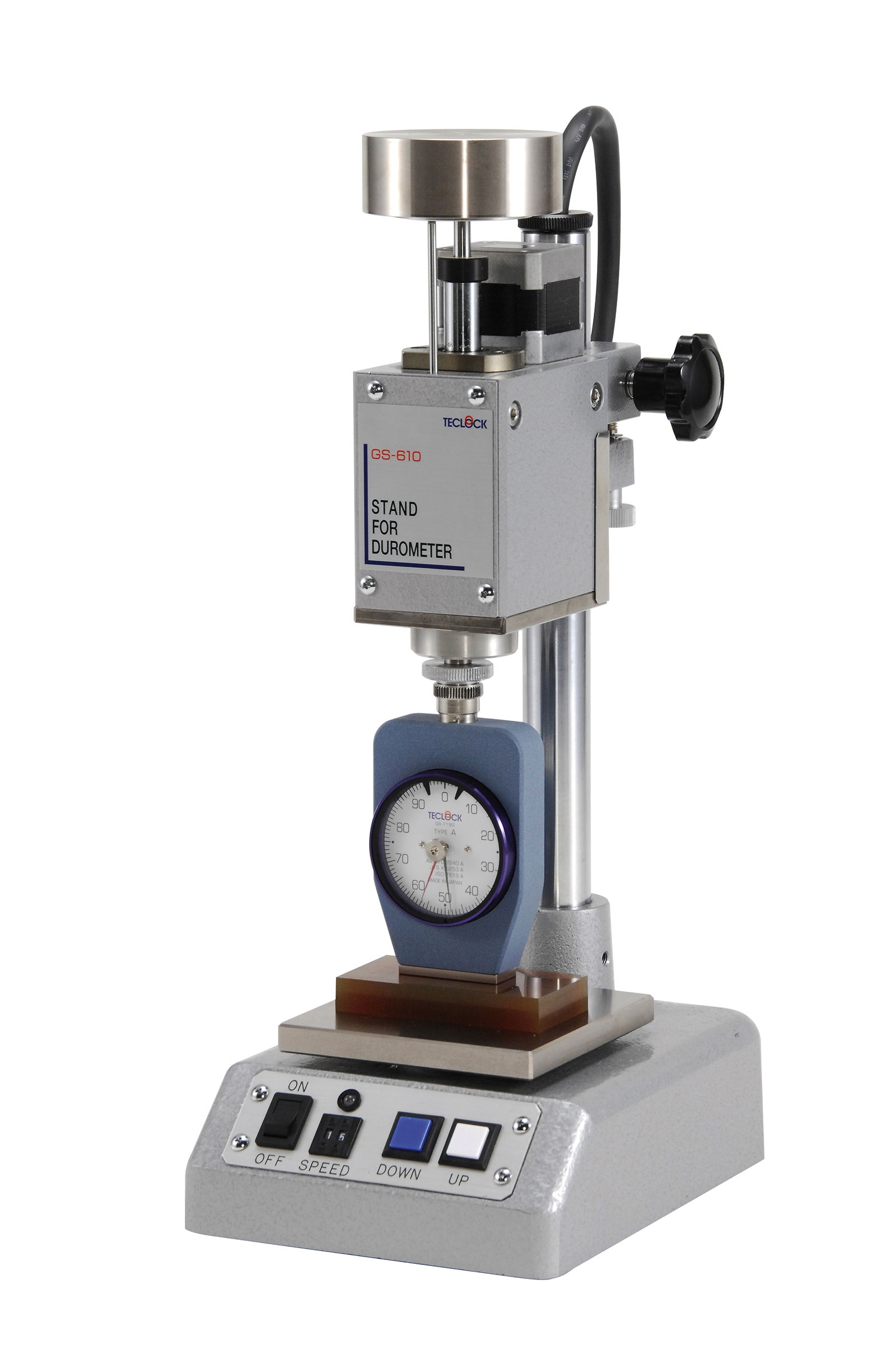
DUROMETER HYDRALIC STAND

TECLOCK

view
x
image description

DUROMETER MANUAL STAND GS-615

TECLOCK

view
x
This supplementary device assists hardness measurements by using hydraulics to provided a constant load. Measurements can be taken with a roughly 1kg load for type A Durometer and a roughly 5kg (using optional 4kg weight (ZY-046) load for type D Durometers. Teclock made in Japan
Buy Now
image description

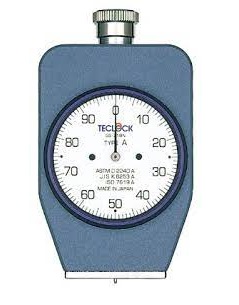
Durometer Type A - GS-719 JIS K 6253 Standrad

TECLOCK

view
x
image description

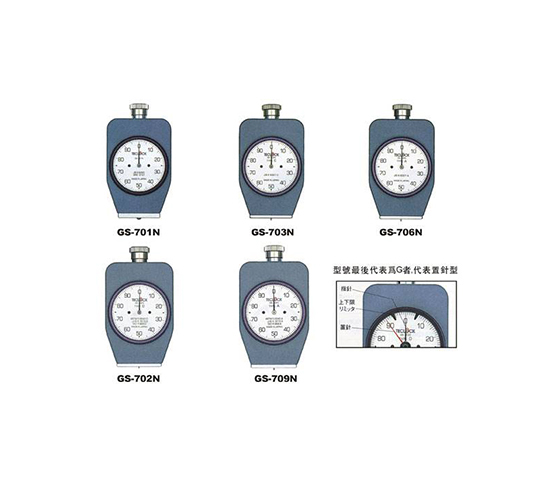
Durometer Hardness Tester Shore A

TECLOCK

view
x

Measuring Precision: The Durometer Hardness Tester Shore A

Accuracy defines success in rubber and plastic manufacturing. To ensure material consistency, engineers rely on the Durometer Hardness Tester Shore A. This essential device measures the indentation hardness of soft elastomers and flexible materials.

What is Shore A Hardness?

The Shore A scale specifically targets softer materials. This includes items like rubber bands, automotive seals, and flexible PVC. The tester uses a hardened steel rod with a truncated cone point. When you press the device against a surface, it measures how deep the point penetrates.

Why Accuracy Matters

Material hardness impacts how a product performs under pressure. If a gasket is too hard, it will not seal correctly. If it is too soft, it might deform or tear. Using a Durometer Hardness Tester Shore A allows quality control teams to verify that raw materials meet exact specifications.

How to Get the Best Results

Follow these steps for a reliable reading:

  • Flat Surfaces: Ensure your sample is flat and at least 6mm thick.

  • Consistent Pressure: Apply the durometer firmly and quickly without shock.

  • Multiple Tests: Take at least five measurements at different points.

  • Temperature Control: Perform tests at standard room temperature for stability.

Choosing the Right Tool

Most modern testers feature digital displays for easy reading. These models often include a "peak hold" function. This feature captures the highest hardness value automatically. Whether you choose an analog or digital version, regular calibration is necessary to maintain precision.

By integrating Shore A testing into your workflow, you eliminate guesswork. You protect your reputation and ensure every component performs as designed.

Compliance with JIS K 6301 standard was established in 1950 and had sustained base of rubber industry of our country but was discontinued in 1998 because it did not comply with ISO and also JIS K 6253 was prescribed on its behalf. However, It had been used for 60 years as “Rubber hardness tester” and even now it is used as test data between certain parties in charge with mutual consensus although movement to new JIS has progressed
Buy Now
image description

Shore-A GS-709 - Rubber Hardness Tester

TECLOCK

view
x
Compliance with JIS K 7215, ISO 868 & ASTM D 2240 standard. This standard is prescribed by plastic industry in Japan apart from testing method of hardness of rubber. This is basically equal to Durometer of JIS K 6253, as only its round up method of spring load value etc. is different. But we distinguish model name as another Durometer according to the view of conformity to standard.
Buy Now
image description

Diamond Indenter - Hardness

PREMIUM

view
x
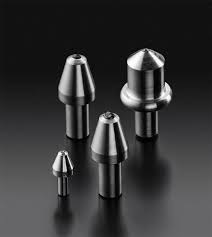
Indenter for Hardness Testing Machine ESLLR Series The quality of Indenter for Hardness Testing Machines are decided by the quality of diamond itself and crystal orientation accuracy of form ! Only Selected high quality diamond is used in EISEN. Indenter stable quality is warranted by high metallurgy technique and grinding diamond skill measuring skill
Buy Now
image description

Clamp Brinell and Rockwell Hardness Tester

PREMIUM

view
x
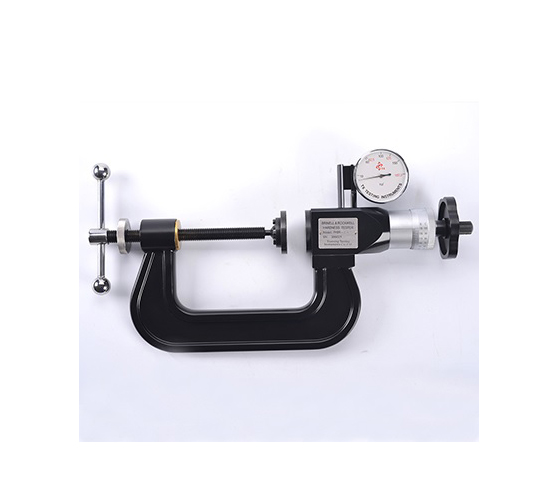
Portable Rockwell / Superficial Rockwell / Brill & Rockwell Hardness Testers. The principle and structure of this device is in accordance with ASTM E110. Meeting the requirement of ISO6508/6506 and ASTM E18 / E10. Designed to the basic principle of Rockwell hardness test. The test force is apply by screw and a calibrated U-sharp spring. Two indications are installed on the tester. One is Dial indicates the force value by measuring the deformation of the elastomer, and one precision screw micrometer used for testing the indentation depth
Buy Now
image description

Barcol Hardness Tester

PREMIUM

view
x
It is the typical model which is in widest application mainly used for rapid hardness test for aluminum and aluminum alloy, as well as fiberglass reinforced plastic. Barcol hardness tester has the simple operation by just single hand and wide measuring range, no experience to be needed. It can be applied to all the aluminum and aluminum alloy, only need to contact one side to finish the test.
Buy Now
image description

Magnetic Rockwell Hardness Tester

PREMIUM

view
x

Master On-Site Inspections with a Magnetic Rockwell Hardness Tester

Measuring the hardness of massive steel components is a major challenge. You cannot easily move a one-ton engine block to a laboratory bench. A Magnetic Rockwell Hardness Tester solves this problem instantly. It brings the precision of a lab right to your factory floor.

How the Magnetic Base Works

This specialized tool uses a powerful permanent magnet. You simply attach the tester directly to the surface of the steel part. The magnet holds the device with immense force. This stability allows the indenter to apply pressure without shifting. Because it grips the part, you do not need a bulky support frame. This design makes it the most portable solution for large-scale engineering.

Accurate Results Anywhere

Despite its portability, this tool follows the standard Rockwell principle. It provides direct readings on the scale. You can test flat surfaces, cylinders, and even large pipes. Operators love the simple interface. You turn a lever to engage the magnet and then apply the test load. It eliminates the need for sample cutting or complex preparations.

Key Benefits for Industrial Use

  • True Portability: Carry the tester in a small case to any job site.

  • High Efficiency: Get accurate results in less than a minute.

  • Versatile Design: It works on both flat and curved ferromagnetic parts.

  • Cost-Effective: Save money by testing parts without destroying them.

Reliable hardness data ensures your materials meet safety standards. If you work with large iron or steel structures, this tool is essential. It combines rugged durability with high-tech accuracy. Upgrade your quality control process today with a magnetic solution.

Fix Rockwell test head to the surface of iron and steel parts to test the hardness by applying magnetic force. Follow Rockwell hardness test method completely and the test condition complies with standard of ISO 6508 and ASTM E 18. The magnetic Rockwell hardness tester is mainly applied in on-site quick test body hardness of steel parts. Test hardness of steel plate, pipe, axis, mould, huge forgings and huge and medium-size heat treatment parts if surface available. Test hardness of weld joint in boiler, pressure vessels, and pressure pipes. Replace low accurate and unreliable Leeb hardness testers.
Buy Now
image description

Webster Hardness Tester

PREMIUM

view
x
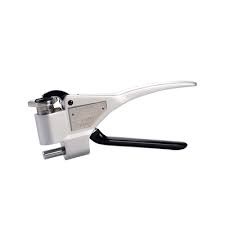
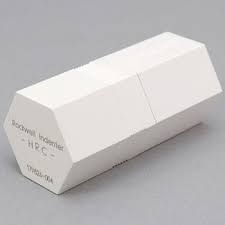
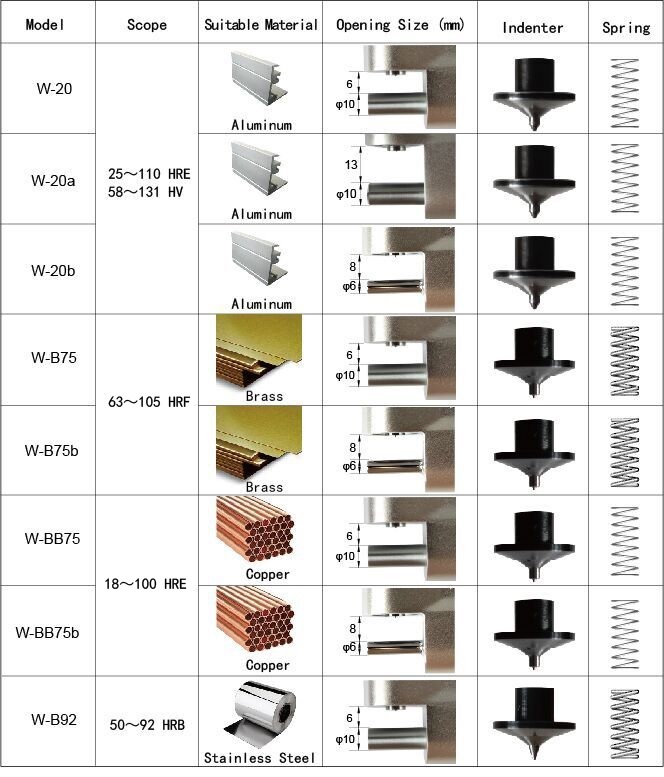
Webster Hardness Testers are applied to the quick test for the hardness of aluminum alloy profiles, pipes, plates, aluminum parts and other soft metal. It can be used to estimate whether the aluminum profile has aging or whether the aging is qualified, distinguish different aluminum grades and different aging condition. The tester is the first choice instrument for testing the mechanical property of aluminum alloy profiles.
Buy Now