CATEGORY:

Dimensional Measuring Instruments

Filter results by:
image description

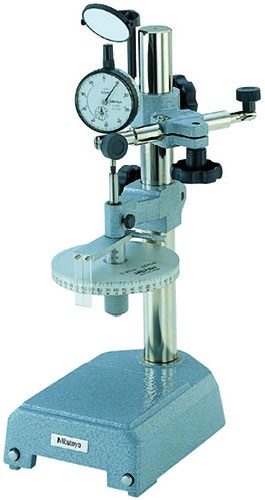
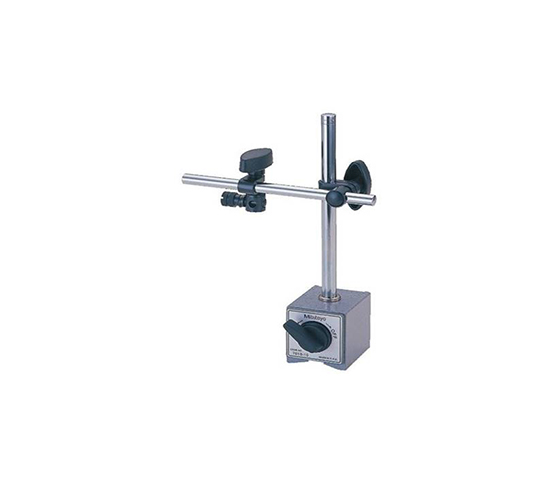
MAGNETIC STAND

MITUTOYO

view
x

Why Use a Magnetic Stand?

Accuracy is everything in machining. A magnetic stand eliminates the frustration of shaky setups. This tool provides the micro-control needed for Dial Test Indicators. It combines industrial durability with the delicate touch required for high-end calibration.

Essential Features for Your Workspace

  • Powerful 600N Magnetic Force: The switchable base delivers a 600N grip. It stays firmly attached to any ferrous surface, ensuring your setup never slips.

  • Single-Knob Locking: A central mechanical locking system secures all joints simultaneously. One turn provides a rigid, vibration-free structure.

  • Universal Stem Compatibility: The versatile holder accepts 6mm, 8mm, and 3/8" diameters. It supports almost any professional gauge currently in your shop.

Built for Industrial Excellence

The "universal" design thrives in demanding environments. Whether on a CNC bed or an engine block, this stand offers 360-degree movement. It reaches into tight spots where standard mounts fail. By clearing clutter, it lets you focus entirely on your measurements.

Upgrade Your Precision Standards

Better tools lead to better results. Investing in a magnetic stand boosts your accuracy instantly. It stabilizes your measurement gauges and ensures your readings are repeatable and reliable.

Pro Tip: Engage the magnet only after positioning the arm near your target. This protects the precision tip of your indicator from sudden impacts.

Don't settle for "close enough." Switch to a mounting solution built for professionals. High-quality work requires a rock-solid foundation.

The stem holder accept diameter 6mm, 8mm or 3/8" Magnetic force 600N
Buy Now
image description

MeasurLink Real Time SPC

MITUTOYO

view
x

Transforming Quality Control with MeasurLink Real Time SPC

Modern manufacturing demands tight tolerances and zero-defect production runs. Relying on manual paper logs introduces costly human errors and delays quality decisions. Quality teams need immediate insight into shifting process trends. MeasurLink Real Time SPC delivers an automated data collection framework that transforms live measurement results into actionable statistical control.

What Is MeasurLink Real Time SPC?

MeasurLink Real Time SPC is a specialized statistical process control software module. It connects digital measuring instruments, CMMs, and vision systems directly to a centralized SQL database. Inspectors acquire measurement points electronically. The platform plots control charts instantly, calculating critical capability metrics like Cp and Cpk during active inspection runs.

Top Operational Benefits for Smart Factories

Integrating real-time statistical tracking upgrades quality management across every production stage:

  • Prevents Defective Scrap: Instant alerts inform machine operators the moment dimensions drift out of control limits.

  • Eliminaes Manual Data Errors: Direct tool connections record values automatically, cutting transcription mistakes completely.

  • Accelerates Audit Prep: Centralized data storage simplifies traceabilty, lot filtering, and compliance reporting.

  • Extends Tool Life: Monitoring subtle trend shifts allows technicians to replace worn tooling before catastrophic failures occur.

How to Implement Real-Time SPC

Deploying an automated data setup involves four streamlined steps:

  1. Connect Measurement Hardware: Link digital calipers, micrometers, or multiplexers to your networked inspection station.

  2. Define Part Routines: Set nominal dimensions, tolerance limits, and required sample frequencies inside the software database.

  3. Execute Guided Testing: Follow visual 2D or 3D part callouts as operators measure components on the shop floor.

  4. Monitor Live Dashboard Visuals: Review live Xbar-R charts and automated capability reports to maintain total process stability.

Long-Term Value for Manufacturing

Manual data entry cannot keep pace with high-speed production environments. Automated tracking reveals hidden process variations early, protecting your operating margins.

Adopting MeasurLink Real Time SPC strengthens process control, lowers scrap costs, and ensures consistent product quality across every shift.

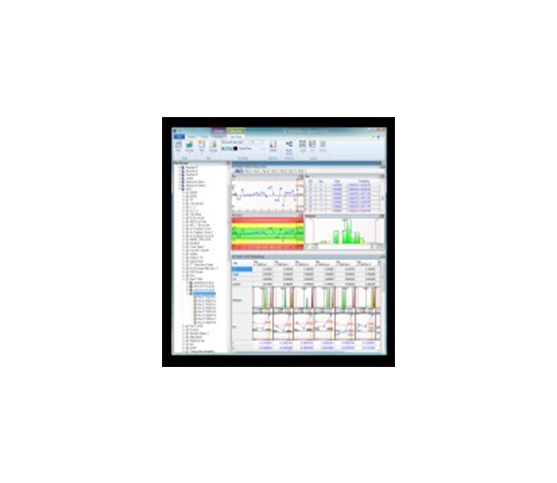
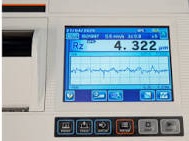
MeasurLink 10 - Real-Time Real-Time Data Collection Module The data collection interface provides real-time graphics for run charts, control charts, histograms and statistics. Standard views include Datasheet (observations and charts), Classic View (chart windows), and 2D view (part images with callouts that include charts and statistical data along with a customizable Info View and additional Manager views. Full reporting template functionality is also provided
Buy Now
image description

SURFACE ROUGHNESS TESTER COLUMN STAND

MITUTOYO

view
x

Mastering the Surface Roughness Tester Column Stand: Achieve Stable Precision

Surface texture directly impacts part performance, wear resistance, and lubrication retention. Handheld surface checks often introduce micro-vibrations and human error. Operators require a rigid, repeatable mounting system for precise stylus trace paths. A Column Stand provides the rigid positioning required to capture high-accuracy profile readings every single time.

What Is a Surface Roughness Tester Column Stand?

A surface roughness tester column stand is a heavy-duty mounting fixture. It features a heavy cast-iron base, a vertical guide column, and a fine-adjustment drive bracket. The stand holds the drive unit and stylus detector securely above the workpiece. Operators adjust height positioning precisely, eliminating hand movements that distort micro-inch profile measurements.

Key Benefits for Quality Control Labs

Upgrading to a dedicated mounting stand transforms surface inspection reliability:

  • Maximum Measurement Stability: Rigid column structures absorb shop floor vibrations, keeping baseline noise levels low.

  • Micro-Height Adjustment: Fine-pitch feed knobs let technicians align the stylus tip against complex part geometry easily.

  • Improved Repeatability: Fixed positioning ensures consistent stylus pressure and speed across repeated testing cycles.

  • Versatile Positioning: Swivel clamps and tilting mounts accommodate angled faces, cylindrical shafts, and flat surfaces smoothly.

Step-by-Step Setup and Operation

Follow these four simple steps to execute precise surface roughness checks:

  1. Clean Work Surfaces: Wipe the granite base, column guide, and workpiece clean with a lint-free cloth.

  2. Mount the Drive Unit: Secure the detector drive unit into the stand bracket without over-tightening the clamp screws.

  3. Set the Stylus Height: Lower the drive unit using the fine-adjustment knob until the stylus lightly touches the test specimen.

  4. Run the Profile Trace: Execute the measurement cycle from your tester display, keeping hands completely off the fixture.

Maintenance Habits for Lasting Accuracy

Keep your column stand in peak condition with routine maintenance. Apply a light layer of protective oil to the vertical steel column weekly. Keep dust and grinding debris off the drive rack mechanisms. Store the unit on a flat, vibration-free table when not in use.

Integrating a Surface Roughness Tester Column Stand eliminates measurement noise, speeds up testing routines, and guarantees reliable quality assurance across every batch.

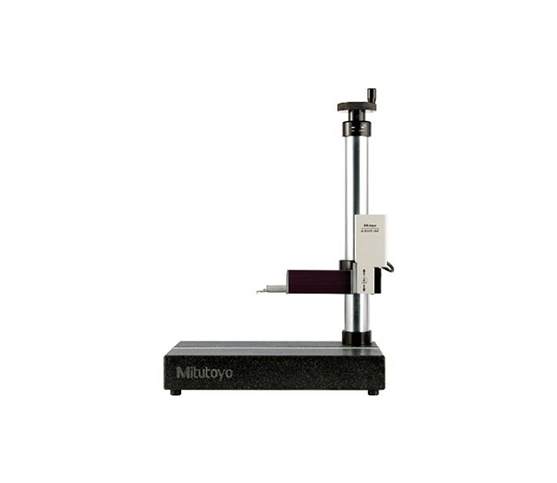
This simplified stand is a optional accessory for SJ-410 Able to set the height according to the workpiece
Buy Now
image description

SURFACE ROUGHNESS TESTER SJ-310

MITUTOYO

view
x

Master Precision with the Surface Roughness Tester SJ-310

Achieving the perfect finish requires more than just a visual check. The Surface Roughness Tester SJ-310 brings laboratory-level precision directly to the production floor. This portable unit empowers operators to measure surface textures with incredible speed and accuracy. It is the gold standard for anyone who needs reliable data without moving parts to a dedicated lab.

Advanced Features for Modern Inspection

The Roughness Tester stands out due to its user-centric design. It features a large, 5.7-inch color touch-screen that provides high visibility even in dark factory environments.

  • Built-in Printer: Generate hard-copy reports instantly for immediate documentation.

  • Touch-Screen Navigation: Access menus and settings with an intuitive, easy-to-use interface.

  • Internal Memory: Store up to 10 measuring conditions and 300 data points internally.

  • Multi-Standard Compliance: The tool supports international standards like ISO, ANSI, and VDA.

Enhance Your Workflow Efficiency

Portability shouldn't mean compromising on power. The Surface Roughness Tester allows you to perform measurements at any angle, including vertical and upside-down surfaces. Its rechargeable battery ensures you can work all day without hunting for an outlet. Because the unit analyzes data instantly, your team can make fast adjustments to machinery, reducing scrap and saving money.

The Ultimate Professional Choice

Stop guessing about your surface quality. The Surface Roughness Tester SJ-310 offers the durability and precision that Mitutoyo is famous for worldwide. Whether you work in automotive, aerospace, or general machining, this tool provides the data you need to succeed. Upgrade your inspection process today and ensure every workpiece meets your highest standards.

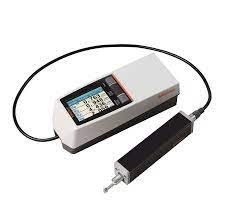
Portable hand-held model Wide range of parameter example Ra, Ry, Rz, Rmax.etc Larger Color Graphic display Built-in printer Skidded styles measurement
Buy Now
image description

Portable Surface Roughness Tester SJ-210

MITUTOYO

view
x

On-the-Go Precision: Portable Surface Roughness Tester SJ-210

Verifying surface finish quality requires speed and accuracy on modern shop floors. Transporting heavy parts to a metrology lab creates costly production bottlenecks. The Portable Surface Roughness Tester SJ-210 solves this challenge by delivering lab-grade surface finish measurement directly to your machine.

This guide explores how this compact tester elevates quality control across manufacturing environments.

What Is the Portable Surface Roughness Tester SJ-210?

The SJ-210 is a handheld surface profilometer designed by Mitutoyo for portable measurement.

Equipped with a high-resolution color LCD screen and a detachable drive unit, this tool measures surface textures ($Ra$, $Rz$, $Rq$) on flat, curved, or slanted surfaces. Operators get instant visual profile graphs without connecting to an external computer.

Key Operational Advantages

Integrating the SJ-210 into your inspection workflow offers immediate practical benefits:

  • Compact Portability: Fits comfortably in one hand for easy testing on large workpieces.

  • Color Display: Displays numerical data, color judgment curves, and profile graphs clearly.

  • Detachable Drive Unit: Separates from the main unit to reach tight internal bores and recessed areas.

  • Multi-Language Support: Features an intuitive interface supporting 16 different languages.

Common Industrial Applications

Machinists and quality managers rely on the SJ-210 for daily surface verification:

  1. Machined Metal Parts: Measure turned, milled, or ground metal surfaces during active production.

  2. Automotive Components: Inspect engine blocks, crankshafts, and cylinder bores on the floor.

  3. Incoming Quality Control: Verify raw materials and vendor parts before assembly.

  4. Toolroom Maintenance: Check die surfaces and mold polishes to ensure smooth operations.

How to Take a Measurement in 4 Steps

Follow these simple steps for reliable surface roughness data:

  1. Position the Detector: Place the drive unit stylus smoothly against your workpiece.

  2. Press Start: Initiate the trace sweep using the front control panel.

  3. Review Results: Check $Ra$ values and graphic profiles directly on the color screen.

  4. Save or Output Data: Store readings in internal memory or export via USB.

Final Thoughts

The Portable Surface Roughness Tester SJ-210 bridges the gap between lab precision and shop floor convenience. By catching surface flaws early, this durable tester saves rework costs and maintains top manufacturing standards.

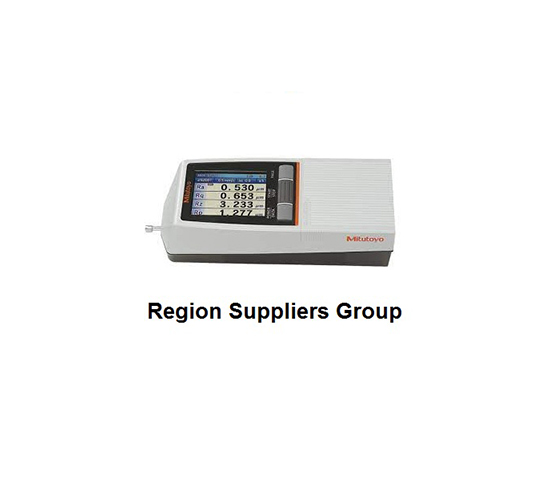
Portable hand-held model SJ-210 Wide range of parameter example Ra, Ry, Rz, Rmax.etc Color Graphic display Built-in memory for data storage Skidded styles measurement  
Buy Now
image description

STEEL RULES

MITUTOYO

view
x

Essential Precision: The Machinist’s Guide to Steel Rules

Precision stainless steel rule for shop floor layout and measurement, AI generated

Every accurate workshop project starts with a reliable measurement. While tape measures work well for rough carpentry, metalworking requires strict accuracy. High-quality rules provide the rigid precision needed for fast layout work, scribing, and component checks.

This guide explains why stainless steel rules remain a fundamental measuring tool in modern workshops.

What Are Steel Rules?

Steel rules are straight, flat measuring strips made from hardened stainless steel or spring steel.

Unlike flexible plastic, precision steel rules feature etched, photo-engraved graduations. These permanent markings resist wear, chemicals, and shop grime, ensuring clear readability over decades of hard use.

Key Advantages for Machinists and Craftsmen

Adding quality steel rules to your workbench delivers clear practical benefits:

  • High Accuracy: Etched markings eliminate reading errors caused by surface wear.

  • Durability: Stainless steel construction resists corrosion, bending, and edge damage.

  • Dual Scales: Standard models feature metric and imperial graduations on opposite edges.

  • Straightedge Utility: The rigid ground edge serves as a reliable guide for scribing straight layout lines.

Common Workshop Applications

Craftsmen across many technical fields use steel rules for daily tasks:

  1. Machining Layout: Mark cutting reference lines directly on stock materials using a scriber.

  2. Setting Up Tools: Set blade heights on table saws and router tables accurately.

  3. Calibrating Calipers: Perform quick sanity checks on digital calipers and depth gauges.

  4. General Inspection: Measure raw stock lengths and hole depths on the shop floor.

How to Care for Rule in 3 Steps

Follow these basic steps to maintain long-term measurement accuracy:

  1. Keep It Clean: Wipe away oil, metal chips, and grinding dust after every shift.

  2. Avoid Misuse: Never use your precision rule as a scraper or screwdriver.

  3. Store Properly: Hang the rule by its hanging hole or keep it flat in a protective drawer.

Final Thoughts

Precision bridge the gap between rough estimation and micrometer accuracy. By investing in durable, etched rules, you ensure consistent measurements and protect your workshop's quality standards.

Clear graduation on satin-chrome finish Stainless tempered
Buy Now
image description

TESTER UDT-2 for Indicator

MITUTOYO

view
x

Precision Calibration: TESTER UDT-2 for Indicator

Uncalibrated measuring tools compromise manufacturing quality across the shop floor. Over time, mechanical wear causes dial gauges to drift out of tolerance. The TESTER UDT-2 for Indicator solves this quality control challenge by offering a reliable calibration stand to verify dial gauge accuracy.

This guide explores how the UDT-2 calibration tester ensures precise measurement results.What Is the TESTER UDT-2 for Indicator?

The UDT-2 is a dedicated metrology tester designed for calibrating dial indicators, test indicators, and bore gauges.

Featuring a high-precision micrometer head mounted on a rigid cast frame, this stand allows quality inspectors to check indicator accuracy across their full measuring range.

TESTER UDT-2 for indicator calibration checks, AI generated

Key Advantages for Calibration Labs

Adding the UDT-2 calibration stand to your toolroom offers clear operational benefits:

  • High Calibration Precision: Verifies fine graduations down to 0.001 mm or 0.0001 inches.

  • Rigid Construction: Stable iron base eliminates frame flexing during test spindle adjustments.

  • Versatile Mounting: Securely clamps stems and lug backs of various indicator sizes.

  • Cost Efficiency: In-house calibration saves thousands in external testing fees annually.

Common Industrial Applications

Quality control managers and calibration technicians rely on the UDT-2 tester for routine tasks:

  1. Routine Metrology Maintenance: Verify dial indicator accuracy before issuing tools to machinists.

  2. ISO Compliance Audits: Document calibration accuracy curves to satisfy strict quality standards.

  3. Repair Verification: Test repaired indicators to ensure full mechanical responsiveness.

  4. Bore Gauge Calibration: Set up linear measurement standards for internal diameter gauges.

How to Test an Indicator in 4 Easy Steps

Follow these simple steps to perform an indicator calibration test:

  1. Mount the Indicator: Clamp your dial gauge firmly into the tester holding bracket.

  2. Set Initial Zero: Bring the micrometer spindle against the contact point and zero both dials.

  3. Advance the Micrometer: Rotate the micrometer head in precise incremental steps.

  4. Compare Readings: Note deviations between the micrometer displacement and the indicator dial.

Final Thoughts

The TESTER UDT-2 for Indicator protects your shop from measurement errors. By verifying gauge performance in-house, this durable calibration stand ensures consistent accuracy and maintains top manufacturing standards.

  • UDT-2 is the accuracy tester for 0.01mm resolution/graduation dial indicators, dial test indicators and bore gages.
  • Stem mounting hole: ø6, ø8mm (Metric) ø1/4”, ø3/8” (Inch)
Buy Now
image description

THICKNESS GAGES

MITUTOYO

view
x

Precision Clearance: Thickness Gages with Tapered Leaves

Measuring fine clearances in tight mechanical assemblies presents tough challenges for technicians. Standard straight blades often bind against narrow housings or curved surfaces. Utilizing thickness gages with tapered leaves allows inspectors to slide feeler blades smoothly into restricted gaps without snagging.

This guide explores how tapered feeler gages enhance precision measurement across busy workshop environments.

What Are Thickness Gages with Tapered Leaves?

Thickness gages (feeler gages) consist of calibrated steel blades bound in a protective steel holder.

Unlike straight-blade gages, tapered leaf models narrow toward the tip. This narrow point enables technicians to insert the blade into hard-to-reach openings where wide blades cannot fit.

Key Operational Advantages

Choosing tapered blades over straight feeler gages offers clear benefits for mechanics and machinists:

  • Superior Accessibility: Slender tips access confined slots, recessed valve channels, and tight mating surfaces easily.

  • Etched Markings: Etched thickness dimensions on every leaf prevent guesswork during fast inspection routines.

  • Flexible Durability: Tempered spring steel leaves resist permanent bending, corrosion, and heavy shop wear.

  • Locking Nut Control: A knurled locking nut secures chosen leaves in place or lets you replace worn blades.

Common Industrial Applications

Technicians across automotive and manufacturing sectors rely on tapered leaf gages for critical tasks:

  1. Automotive Valve Adjustment: Measure engine valve clearances under cramped camshaft assemblies.

  2. Spark Plug Gapping: Check and adjust precise electrode gap distances on engine plugs.

  3. Bearing Clearance Checks: Inspect internal clearance in heavy machinery and pump housings.

  4. Flange Alignment: Verify gap uniformity between pipe flanges during pipe fitting projects.

How to Check Gaps in 4 Steps

Follow these simple steps to ensure accurate clearance measurements:

  1. Select the Target Leaf: Choose a blade based on your manufacturer tolerance specification.

  2. Insert the Tapered Tip: Slide the narrow tip flat into the clearance opening gently.

  3. Assess the Resistance: Feel for a light friction drag as you move the blade back and forth.

  4. Combine Leaves If Needed: Stack two thin leaves together if you need an intermediate thickness size.

Final Thoughts

Thickness gages with tapered leaves remove frustration from tight clearance checks. By accessing cramped spaces effortlessly, these precision feeler gages save time, protect machinery, and maintain exact operational tolerances.

Metric thickness gages are available with tapered leaves Each leaf is marked with its thickness Each leaf is detachable if necessary
Buy Now
image description

THREAD PITCH GAGES

MITUTOYO

view
x

Identify Fasteners Quickly and Accurately

Matching the wrong bolt to a threaded hole can destroy expensive machinery components instantly. Stripped threads cost workshops thousands of dollars in repairs and downtime every single year. High-quality thread pitch gages solve this frustration completely. They provide a fast, foolproof way to identify any fastener thread profile.

What are Thread Pitch Gages?

Thread pitch gages are compact, pocket-sized measuring tools containing a collection of serrated metal leaves. Manufacturers precisely stamp each leaf to match a specific thread profile.

Operators use them to determine the pitch of a screw, bolt, or tapped hole. Metric sets measure the distance between thread crests in millimeters, while imperial sets count the number of threads per inch (TPI).

Key Features of a Professional Gage Set

Investing in a rugged, industrial-grade leaf set offers major shop floor benefits:

  • Dual-System Versatility: Most comprehensive kits bundle both metric and imperial leaves into a single folding case.

  • Narrow Leaf Profiles: The slim, locking leaves reach easily into tight internal nuts and deep tapped cavities.

  • Hardened Steel Construction: The durable serrated teeth resist bending and wear during heavy daily use.

  • High-Visibility Stamping: Clear, laser-etched markings ensure you select the correct size instantly.

Pro Tips for Flawless Thread Matching

Inspection Tip: Always clean dirt, rust, and old lubricants off the fastener before testing. Debris trapped in the grooves mimics a bad thread fit.

Press the selected leaf firmly into the threads of your bolt. Look toward a light source behind the tool. If you see light shining through the teeth, the pitch is incorrect. Try different leaves until the teeth mesh perfectly with zero gaps.

Stop guessing your thread sizes and ruining your workpieces. Invest in a premium set of thread pitch gages today to ensure flawless assembly on every project.

Thread pitch is stamp on each gage Metric, Unified and Whitworth screw pitch gages
Buy Now
image description

UNIVERSAL BEVEL PROTRACTOR

MITUTOYO

view
x

Precision Angle Measurement Made Easy

Accurate angle measurement is the backbone of high-quality machining, engineering, and woodworking. When standard protractors fall short, professionals rely on the Universal Bevel Protractor. This mechanical masterpiece ensures your components fit perfectly every single time.

What is a Universal Bevel Protractor?

The Universal Bevel Protractor is a highly accurate angular measuring instrument. Unlike basic tools, it measures angles down to 5 minutes of a degree ($5'$ or $1/12^\circ$).

Engineers use it to inspect mechanical parts, set up machine tools, and check jigs. Its versatility stems from its adjustable blade and rotating dial, which allow you to measure almost any angle with absolute confidence.

Key Components and How it Works

The tool consists of a few essential parts designed for maximum stability:

  • The Base/Stock: Aligns against the reference surface of your workpiece.

  • The Rotating Dial: Houses the main scale, graduated in degrees from $0^\circ$ to $90^\circ$.

  • The Vernier Scale: Provides the ultra-fine minute readings.

  • The Adjustable Blade: Slides and locks to track the specific angle you are measuring.

To take a reading, you clamp the base and blade against the workpiece. You read the main scale first for whole degrees, then use the vernier scale to find the exact minutes.

Why Your Workshop Needs One

Efficiency Tip: Standard tools cause errors that ruin raw materials. Upgrading to a vernier-based protractor eliminates guesswork entirely.

It offers unmatched durability and precision. It handles complex layout work effortlessly. Whether you run a busy machine shop or a precision DIY garage, this tool elevates your craftsmanship.

Invest in a Universal Bevel Protractor today to achieve flawless, professional-grade results on every project.

High precision instrument for accurate angle measurement on machine, molds and jigs
Buy Now
image description

WORKING STANDARD SCALE

MITUTOYO

view
x

Maintain Daily Accuracy with a Working Standard Scale

Precision requires constant vigilance on the production floor. While a master scale stays in the lab, a Working Standard Scale handles the daily grind. These tools provide a reliable reference for calibrating your shop equipment. They ensure that every measurement stays within tolerance throughout the work week.

The Role of a Working Standard

A working standard serves as your first line of defense against measurement errors. You use it to check calipers, height gauges, and vision systems directly on the floor. This practice prevents small deviations from becoming expensive mistakes. By verifying tools daily, you maintain 100% confidence in your output. It bridges the gap between high-level laboratory masters and everyday production tools.

Built for the Shop Environment

Manufacturers design these scales for durability. Unlike delicate master scales, a working standard scale resists the rigors of a busy workshop.

  • Rugged Materials: High-strength glass or stainless steel ensures longevity.

  • Clear Markings: Laser-etched graduations remain visible after years of use.

  • Protective Coatings: These scales often feature surfaces that resist oil and scratches.

  • Portable Design: Easy handling allows for quick checks at different workstations.

Why Your Facility Needs One

Using a working standard scale streamlines your quality control process. It reduces the downtime spent sending tools back to the lab for minor checks. Your team can verify their own equipment in seconds. This autonomy boosts productivity and fosters a culture of precision.

Consistent calibration is the secret to manufacturing success. Equip your team with a professional working standard to keep your production line running smoothly.


Ideal for checking magnification accuracy of profile projector and microscope and the table feeding accuracy of measuring equipment
Buy Now
image description

CENTERING HOLDER

MITUTOYO

view
x

Achieve Flawless Precision with a Centering Holder

Machining success relies entirely on perfect alignment. Even a tiny fraction of a millimeter out of alignment can ruin your workpiece or break an expensive tool. That is why a centering holder is essential for every lathe and milling setup. It ensures your tools line up perfectly every single time.

What is a Centering Holder?

A centering holder is a specialized workholding accessory designed to align cutting tools precisely with the machine spindle. Operators frequently use them for drilling, reaming, and tapping operations.

By clamping the tool securely, it keeps the cutting edge perfectly concentric to the workpiece. This stability eliminates the tool deflection that causes inaccurate holes.

Key Benefits for Your Machine Shop

Using a high-quality holder completely transforms your production workflow:

  • Eliminates Runout: It holds the tool on the exact centerline to prevent wobbling.

  • Saves Setup Time: Quick-adjust features allow you to align tools in seconds.

  • Extends Tool Life: Balanced forces mean your drills and taps wear down much slower.

  • Improves Surface Finish: Smooth, centered cutting creates cleaner holes.

How to Get the Best Results

Pro Tip: Always clean the machine spindle and the holder shank before installation. Small metal chips can disrupt the alignment.

Indicate the holder using a dial test indicator during setup. Adjust the holder until the runout reads zero. Once you lock it into place, you can run high-speed operations with total confidence.

Don't let misalignment ruin your productivity. Upgrade to a premium centering holder today to maximize your machining accuracy.

Allows large diameter cylinders or holes to be centered on a machine tool.
Buy Now