CATEGORY:

Dimensional Measuring Instruments

Filter results by:
image description

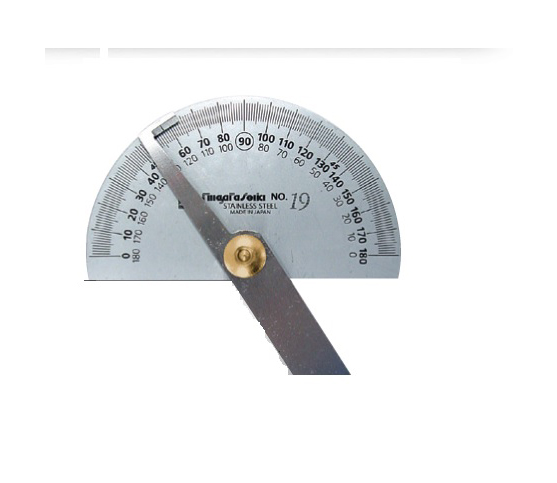
PROTRACTOR

SK Niigata Seiki

view
x

Mastering Every Angle with a Precision Protractor

Accuracy is the foundation of every successful project. Whether you are cutting a crown molding or machining a metal part, you need to know your angles. A precision protractor is the go-to tool for measuring and marking degrees with absolute confidence.

What is a Precision Protractor?

A protractor is a measuring instrument used to determine the exact angle between two intersecting surfaces. While basic plastic versions exist for classrooms, industrial versions use durable stainless steel. These professional tools often feature locking nuts and adjustable arms to hold an angle for repeated marking.

Common Types for Professional Use

Choosing the right tool depends on your specific task:

  • Manual Bevel Protractors: These feature a pivoting arm and a semi-circle head. They are perfect for general shop work.

  • Digital Protractors: These provide a clear LCD readout. They eliminate human error and offer high precision, often down to .

  • Universal Vernier Protractors: These allow for ultra-fine measurements. They use a secondary scale to measure fractions of a degree.

How to Use a Protractor Correctly

To get the best results, press the base of the tool firmly against your reference surface. Extend the swinging blade until it sits flush against the second surface. Tighten the locking screw to "save" the measurement. This technique ensures you can transfer the angle to your workpiece without it shifting.

Why Quality Matters

Cheap tools can flex or lose their calibration. A high-quality precision protractor maintains its edge and provides consistent readings over many years. It reduces material waste by ensuring your first cut is the right one.

From the design phase to final inspection, a reliable protractor is a staple in any serious toolkit. It bridges the gap between a rough estimate and a professional finish.

Length 90 x 1.2mm Scale : 180 x 1 deg. Made in Japan
Buy Now
image description

RING GAUGE

SK Niigata Seiki

view
x

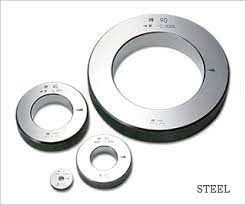
Mastering Precision with the Ring Gauge

Consistency is the heartbeat of manufacturing. When you produce thousands of cylindrical parts, you must ensure every piece fits perfectly. Consequently, a ring gauge serves as the ultimate standard for verifying external diameters. By using this tool, you ensure your components meet strict engineering specifications every single time.

What is a Ring Gauge?

To begin with, a ring gauge is a high-precision measurement tool. Manufacturers typically craft them from thermally stable materials, such as hardened steel or chrome. Furthermore, each gauge features a highly finished internal diameter. As a result, machinists use these tools to check the outside diameter (OD) of pins, shafts, fasteners, and studs with total confidence.

The Power of Go and No-Go Testing

Most quality control teams use ring gauges in pairs. This creates a "limit gauge" system, which works as follows:

  1. Go Gauge: First, the part must slide through this gauge smoothly. If it fits, you know the part is not too large.

  2. No-Go Gauge: Next, the part should not enter this gauge. If it stays out, the part is not too small.

Therefore, if your component passes both tests, it falls within the acceptable tolerance range. This method is much faster than using a micrometer, especially during high-volume production.

[Image demonstrating a shaft being inspected with a Go ring gauge]

Essential Maintenance Tips

To maintain the accuracy of your ring gauge, you must treat it as a master reference. For instance, always clean the workpiece before testing. This prevents abrasive dust from scratching the gauge surface. Additionally, apply a thin layer of protective oil after use to stop rust. Finally, you should schedule regular calibration to account for natural wear over time.

Why Quality Matters

Ultimately, using a certified ring gauge eliminates guesswork on the shop floor. It protects your business from costly rejects. Moreover, it ensures your customers receive perfect parts every time. Whether you work in aerospace or automotive repair, this tool is your best defense against dimensional errors.

Sub-zero treatment (Cryogenic hardened) - ALLOY STEEL As master gauge for "0" adjustment of measuring tools such as bore gauge, inside micrometer, dial caliper, etc. Actual Size 0-30mm, Tolerance +/-1.0um Actual Size 30-50mm, Tolerance +/-1.5um Actual Size 50-100mm, Tolerance +/-2.0um Actual Size 100-200mm, Tolerance +/-5.0um Hardness HV 653-772
Buy Now
image description

STROBOSCOPE BATTERY POWERED DT311-315

SHIMPO

view
x
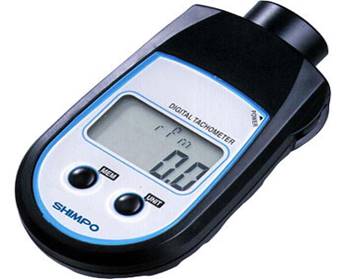
Flash Range: 40-35,000 RPM/FPM Portable, highly stable and accurate, industrial-quality tools for non-contact RPM measurement, inspection and observation of moving parts by "freezing" or "slowing down" the action.
Buy Now
image description

HANDHELD TACHOMETER EE-2B

SHIMPO

view
x
image description

PRECISION STRAIGHT EDGE I-BEAM TYPE

RIKEN

view
x
image description

STEEL STRAIGHT EDGE

RIKEN

view
x
image description

Magneto-Inductive - Rotational Speed Sensors

RHEINTACHO

view
x
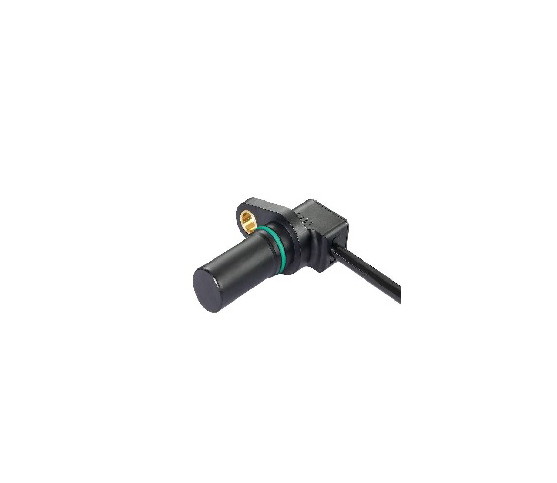
Applications: Speed detection of gearwheels from module 2 and of ferromagnetic material. Speed detection at high revolutions in combustion engines and gearboxes when power supply can not be provided Features: High reliability No power supply necessary Wide temperature range Alignment not required DIN type threads Power supply nicht erforderlich not necessary 50 Hz ... 30 kHz Operating temperature -25 °C ... +85 °C / -13 °F ... +185 °F Operating temperature with plug SC -25 °C ... +120 °C / -13 °F ... +248 °F Degree of protection on request
Buy Now
image description

ADJUSTABLE BENCH LEVEL

RIKEN

view
x
image description

CROSS TEST LEVEL

RIKEN

view
x
image description

LNDINE PRECISION LEVEL

RIKEN

view
x
image description

MAGNET PRECISION SQUARE LEVEL - R-MSL series

RIKEN

view
x
image description

POCKET LEVEL

RIKEN

view
x