

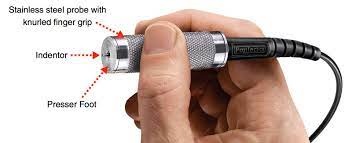
Durometer
The term durometer refers to both an instrument and a unit of measurement. Essentially, it is the standardized method used to quantify a material's hardness—specifically its resistance to permanent indentation. This measurement is absolutely critical in industries like manufacturing, where materials such as rubber, plastics, and elastomers must meet precise quality and performance specifications. Therefore, knowing the durometer value is vital for product reliability, whether you're making car tires, O-rings, or skate wheels.
Understanding Durometer Scales
The key to accurate measurement lies in using the correct scale. Consequently, several specialized durometer scales, known as Shore scales, have been developed. The two most common are Shore A and Shore D.
-
Shore A: This is primarily used for softer materials, like flexible rubber, elastomers, and soft plastics. A running shoe sole, for example, typically measures around 70 Shore A.
-
Shore D: Furthermore, this scale is reserved for harder materials, such as rigid plastics (like PVC or nylon) and hard rubbers. A hard hat or a skateboard wheel would be measured on the Shore D scale.
The testing process involves pressing a standardized indenter into the material's surface with a calibrated force. The depth of the resulting indentation translates directly into the durometer value, which ranges from 0 to 100. In conclusion, an accurate durometer reading ensures that materials possess the correct properties—not too soft to fail under pressure, and not too hard to be brittle or lack the necessary sealing capability.