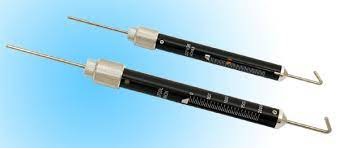
ROD TENSION GAUGE
Why Every Rigger Needs a Quality Rod Tension Gauge
Proper tension keeps your structures safe and efficient. Over-tightened rods risk sudden metal fatigue and snap under load. Loose rods cause structural misalignment, dangerous play, and excess wear. A precision rod tension gauge removes all guesswork from the equation. It provides real-time, repeatable measurements so you can tune with absolute confidence.
How a Rod Tension Gauge Works
A mechanical rod tension gauge calculates tension through deflection. The tool hooks directly onto the solid metal rod. It applies a precise bending force using internal, calibrated springs. A pointer or dial then shows the deflection depth on an integrated scale.
You can cross-reference this scale reading with conversion tables. These charts translate raw values into actual pounds of force or total breaking-strength percentages. Professional models even let you adjust turnbuckles while the tool remains clipped to the rod.
Key Benefits of Precision Testing
-
Enhanced Structural Safety: Prevents catastrophic failures caused by shock loading or hidden fatigue.
-
Maximum Performance: Holds exact mast bend or structural alignment for superior efficiency.
-
Fast Maintenance: Saves time during seasonal tune-ups and hardware inspections.
-
Cost Efficiency: Reduces long-term wear on costly stainless steel hardware.